This morning, I asked my 5-year old daughter what the purpose of the heart is. “What is the heart meant to do?” With a bit of egging, she said “love.” That simple and probably innocent answer gave me the realization that one of the best ways to keep your heart healthy is to keep on loving. I’ve spent practically two decades of my life devoted to the study of the biology of the heart, the understanding of its physiology, and the acceptance if its travails in clinical practice. The scientific community has devoted tons of money and effort finding ways to protect, heal, and save hearts. But nothing even comes close to the very simple answer given by this little child. So I have said it many times before and I will say it once again, “my heart will not rest until there are still others out there who will benefit from my compassion and care.”
And maybe that is the very essence of World Heart Month. Not only to simply raise awareness about heart health, but to inspire and move us to advocate for heart care. To go beyond the confines of our comfort zones and reach out to those who need us the most. As Dr. Ed Timbol once said during his commencement speech, “Failure to love…is one of the worst signs and symptoms of heart failure.” That is why your AUF Cardiovascular Institute has gladly taken on its role to provide the best possible opportunities for heart service, training, education, and advancement in the Central Luzon community.
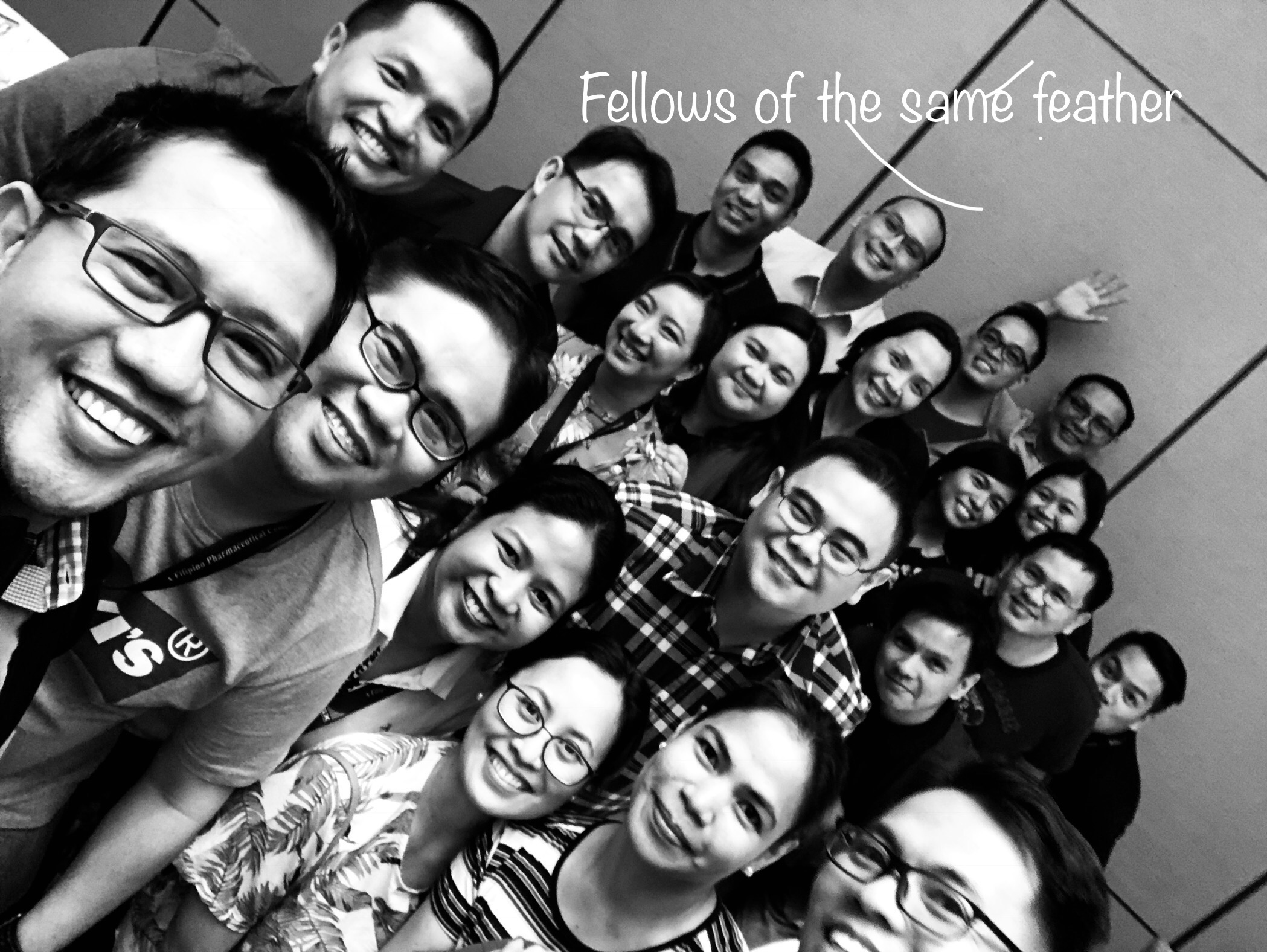
And on that note, I’d like to make a special request of you. If you manage to bump into my graduates and fellows, spare them a kind word, a smile, a handshake, or a tap on the shoulder. It would mean the world to me for them to get that. As a simple gesture of gratitude for their hard work, gratitude that will definitely go a long long way in keeping their hearts eternally motivated.
I cherish those moments when I get to drive my daughter to school. One particular time, she “schools” me with her simple wisdom.
As I was walking back to the parking lot with my 5 year old daughter:
Dad: Can you help me find our car?
Daughter: Ok papa!
Dad: Do you know where it is?
Daughter: No.
Dad: (laughs almost sarcastically) So how will you be able to help me??
Daughter: It’s ok papa. We’ll find it together. (with the most innocent smile)
Dad: (shocked, dumfounded, and ashamed of himself..then later extremely grateful)
More than we will ever admit, we adults have more to learn from the genuine and unadulterated wisdom of children.
More than we will ever admit, we adults have more to learn from the genuine and unadulterated wisdom of children. The parking lot incident reminded me the valuable lesson of “pakikiramay” or solidarity. Despite not knowing the answer to the question, or the details as to how she would be of value to my quest, my not-so-little daughter unwittingly offered the one thing that she could provide with utmost certainty—-companionship.
So the next time someone sincerely asks for help, it would be wise to consider tearing down our prohibitive walls of logic to let the kid at heart finally break through.
“His brilliance does not overwhelm the eye with blinding flashes of light, but rather invites the beholder to come closer to see the illuminating prisms of radiance.”
At the heart of the man is a true artist, in many senses of the word. The Philippine Heart Association’s Distinguished Scientist Awardee for 2015, Dr. Edgardo Timbol is well-known and well-loved for his creativity as a clinician-educator. His keen powers of observation allow him to simplify discussions on electrocardiography to a level that would be appealing even to the amateur student in cardiology. His agility with words makes the discourse of medicine seem brilliantly poetic, capturing the interest and imagination of his most seasoned peers in the profession. He has a wonderful penchant for humor and art, which he cleverly uses to embellish his electrocardiographic stories in his four volumes of “Dysrhythmic Tales from the Heart.”
As the Founding Chair of the Cardiovascular Institute of the Angeles University Foundation Medical Center (AUFMC), doc Ed has inspired countless of students, trainees and colleagues in the healthcare professions. He was instrumental in setting up the Adult Cardiology Fellowship training program at AUFMC, the first and still the only one north of Manila, receiving constant re-accreditation from the Speciality Board of Adult Cardiology in the country. To date, he has helped inspire and successfully graduate seven cardiologists from the training program, all of whom carry the unmistakable stamp of doc Ed’s influence—a unique blend of compassion and quiet brilliance.
Ultimately, his greatness is magnified by his innate humility. Truly camera-shy and quite allergic to stardom, doc Ed exudes a quiet presence that seems to invite priestly-reverence. He would walk across the hospital corridor without demanding the attention befitting his true stature, sharing light banter with students, trainees, and hospital staff. His fatherly aura makes him an automatic “ninongable” or someone who would be an easy choice for a wedding godfather. A doting “lolo” to his ultra-cute grandchildren, a respected role model to his 6 good-looking and well-accomplished children, and a devoted husband to his sweetheart — doc Ed is truly one in a million.
Just when you thought you’ve seen joy, something truly special and unexpected pushes your bounds of happiness and makes you believe in the magic of childhood.
Parenthood. It changes you. It grabs you from within and turns you inside out. It takes whatever negativity there is in this world and melts it into a wonderful heap of pure and unadulterated bliss. And no other being can easily do that better than a child. A child whose worldview is filled with abundant idealism, awe, and excitement.
May we never lose the child in each one of us. May we always latch on to whatever is good and true. May we always retain the capacity for awe. May we always have something great to look forward to.
There is too much good work to be done in this world to waste time doing the opposite. So the next time you see a child’s smile, you know exactly what you have to do.
Go out of your way to make someone else happy today.
If there ever was a common thread that perfectly wove itself into the vibrant and colorful lifeline of Dr. Raul Diaz Jara, then it would have to be composed of these three fibers: wisdom, fortitude and gratitude.
RAUL--From the Germanic ‘Radulf’ which literally means ‘wolf counsel’ or, among the French community, wise counselor.
Born into a family of achievers, Dr. Jara already imbibed a wisdom-seeking philosophy that shone through early on in his journey for knowledge, being a consistent honor student during his entire undergraduate life. His thirst for learning led him to finish as Doctor of Medicine at the University of the Philippines (UP) and graduate from the UP Philippine General Hospital Cardiology training program which he recently headed as Chief. His passion for the art and science of echocardiography later steered his path to the Philippine Heart Center, where he once became head of the Non-Invasive Diagnostic Cardiology Division. On top of his academic pursuits, Dr. Jara’s brilliance shone through even in the administrative arena, as he secured a Career Executive Service Rank VI from the Civil Service Commission of the Philippines, and eventually became Department Manager of the Department of Education, Training and Research of the Philippine Heart Center.
His exacting brand of excellence is well known, and sometimes even feared, by students and trainees in cardiology. He will probably go down in history as one of the most (if not THE MOST) visible Consultants in the training institutions that he becomes affiliated with, pioneering or personally handling the weekly hemodynamics conference, congenital hour and echocardiography hour at the UP PGH and the Philippine Heart Center. His mere presence during conferences can send either shivers down an unprepared presenter’s spine or waves of adulation from a promising protégé. No clinical detail was too inconsequential to be mentioned, no question too mundane to be asked. For him, the field of medicine was not meant for bystanders, but rather for those who actively pursue its truths and boldly face its controversies.
DIAZ--From the Greek term didakhē, meaning doctrine or teaching.
Beyond academic excellence, Dr. Jara demonstrated the fortitude that enabled him to earn the much-deserved respect of his mentors, peers and students. At a time when echocardiography was still at the stage of infancy, Dr. Jara pursued learning in this field with much vigor and determination. There were no elaborate and advanced machines that solved equations at superhuman speeds or generated 3-dimensional images with great clarity and precision. Cardiac diseases were diagnosed non-invasively using only the seemingly abstract linear patterns produced by M-mode as well as the inquisitive and imaginative mind of the echocardiographer. Dr. Jara had to contend not only with the crude echo images but, more importantly, with the logistical constraints that came with the limited availability of such technology in the country. Undaunted by this scenario, he negotiated with Dr. Camilo Porciuncula (Far Eastern University) to allow him to bring his patients for cardiac imaging, escorting them through numerous roundtrip jeepney rides. It is this same kind of fortitude that enabled him to bring the country into the spotlight when he managed to obtain hosting rights and successfully organize the 2010 World Congress of Echocardiography and Vascular Ultrasound in Manila.
Dr. Jara’s passion not only for teaching but for advancing the education of his students was manifest particularly during his stint as Chair of the Education Committee of the Asian Pacific Society of Cardiology from 1995-2004. Through his leadership, the country was able to send 7 Filipino Cardiology trainees to the Victoria Heart Center at Epworth Hospital in Melbourne, Australia during a period of 4 years.
JARA--In Hebrew, the name ‘Jara’ connotes enlightenment.
Despite being highly-decorated as an administrator, clinician and academician, Dr. Jara rested not on his own laurels but gratefully recognized the significant roles that certain people played in his life. Always keeping one foot on the ground, he never failed to acknowledge the ageless counsels of Dr. Ramon Abarquez, Jr. (Professor Emeritus, University of the Philippines) and Dr. Rody Sy (UP Philippine General Hospital), the steady friendship and support of Dr. Nelson Abelardo (UP PGH Section of Cardiology) and Dr. Romeo Santos (Philippine Heart Center), as well as the collegiality of Dr. Jun-ichi Nishikawa (Osaka University), Dr. Tsuguya Sakamoto (Tokyo University) and Dr. Navin Nanda (Distinguished Professor of Medicine and Cardiovascular Disease, University of Alabama Birmingham).
Dr. Jara’s efforts to enlighten his students and colleagues regarding the art and science of echocardiography became more manifest through his lectures, researches and publications. His speaking engagements traverse cultural and racial boundaries, ranging from simple lectures on rheumatic heart disease at the UP College of Medicine to keynote speeches during World Congresses and Conferences in Japan, Brazil, Pakistan, Taiwan, Korea, Malaysia, China, Morocco, USA, Greece and Australia. Despite his hectic schedule as Chief of the PGH Section of Cardiology, Dr. Jara was able to publish 2 books in a span of one year, tackling the basics of echocardiography as well as the intricate issues in adult congenital heartdisease.
Beyond the seemingly intimidating façade, however, is a true family man who draws constant comfort and strength from his beloved wife Lenny and beautiful children. Such a deep sense of gratitude has motivated him to continually serve his alma mater, the UP College of Medicine, as one of the many heroes who toil with no financial compensation. Working tirelessly as a “WOC,” however, has its intangible remunerations—the smile of an indigent patient at the ward, the simple thank you text message of a previous student, the accolade of equally renowned peers, or even the fulfilling thought that a lifetime of indebtedness may be partly paid by the selfless service that he offers the University.
…..
Not all people in their lifetime have the great fortune of encountering such unique individuals who demonstrate a rare combination of qualities worthy of emulation. This book on echocardiography comes out at the most opportune time, as it not only attempts to share knowledge with its readers, but also allows us to pay tribute to the teachers that have molded our minds. I have had the extraordinary privilege of personally knowing and experiencing Dr. Raul Diaz Jara. Our paths serendipitously crossed and, to some degree, eventually aligned during the course of my training in cardiology.
Through his example, he has unwittingly given me a sneak peak into the blueprint of a teacher in the truest sense of the word–Ateacher who strives for wisdom to attain mastery of the craft; a teacher who toils with fortitude to answer the difficult questions that lie ahead in his path; and a teacher who moves with gratitude to inspire his students in the pursuit of their own dreams.
The abovementioned write-up is a modified version of the author’s commentary (original version, 2013) in Dr. Jara’s recent publication, “My First Book in Echocardiography.”
I’ve always maintained the firm belief that no amount of personal honor or accomplishment will ever provide the extremely gratifying feeling of seeing your mentees succeed and exceed you.
Each fellow leaves a mark on the next.
I grew up in an environment that fostered a culture of inspiration, where one could not help but become better simply by being in the presence of highly-driven and tirelessly prolific mentors. Society presidents, decorated over-achievers, national leaders, game-changers, trailblazers, rebels and prophets—you name it, they’re all there. Imagine the level of tension as well as entertainment seeing these respected giants in medicine and cardiology not only slug it out with their impressively collegial approach to scientific discourse but their equally thrilling side-banter about the latest showbiz craze, government news, or hilarious personal anecdotes. Their professional achievements are only superseded by their uncanny ability to be honestly transparent and to some extent even downright humorous with their own flaws and inadequacies. This capacity to come to terms with one’s own infirmities seems to even magnify one’s sterling qualities. To me, that is truly inspiring.
“This capacity to come to terms with one’s own infirmities seems to even magnify one’s sterling qualities.”
PGH Cardiology icons Rody Sy and Nelson Abelardo pass on pearls of wisdom to the “young ones” during the annual Cardiovascular Summit.
This subliminal culture of inspiration was ingrained deeply in my mind and heart that it somehow bled into my own style of mentoring. So when I prematurely got thrust into a position of leadership as Training Officer in our small pond north of the great metropolitan manila, it seemed second-nature to me to reverberate the training gems that I fortunately picked up from my beloved mentors. I really had no complex formula to mentoring my fellows. I just clung to one simple principle — I believed in them even before they got around to believing in themselves (much like the theatrics pulled off by the sly but effective Director Fury to the then doubting group of soon-to-be Avengers). And so I grabbed every opportunity to compliment them, pat them on the back, overemphasize their strengths, and grant them the opportunities to discover their untapped potential.
A tradition is passed on from generation to generation.
This doesn’t mean I was lax. On the contrary, I was sometimes inpatient, demanding, and exacting. In a short span of time moderating weekly conferences, I gained notoriety especially among students, residents and fellows for being the one who asked the hard questions. It seemed like my intoxicating style of questioning was likened to a closed-door NBI interrogation. I particularly blame my mentors tito Monching Abarquez, Greg Patacsil, Rody Sy, Nelson Abelardo, Raul Jara, John Anonuevo, Eugene Reyes, Yobs Punzalan, Tes Abola, and Don Maranon for what I’ve scaringly become today—a mere fraction of what they were in their prime. Kidding aside, I would like to see myself not as a stand-alone and self-accomplished entity, but as an amalgamation of the countless personalities that have jointly shaped my life.
Cardiology training in Central Luzon inspired by pioneer Ed Timbol.
As fate had it, my time in Angeles was not bereft of equally amazing mentors in the persons of Ed Timbol, Ariel Jocson, Dom Albacite, Mario Garcia and Myrna Reblando. It was as if a template for success was laid out in front of me, and all I had to do was go with the flow. So as I wind down my 5-year stint as TO of our program (the first 2 as aide to Dr. Gab Jocson), I have only gratitude in my heart, most especially to the fellows who have gone through me, for granting me the incomparable honor of meeting and mentoring such good souls.
So for those who, once in their life, were inspired by someone else, there is no other recourse but to exude and share that blessing of inspiration to breathe life into another.
Before the flustered cardiology fellow could even respond to this classic and timeless question,the Professor Emeritus of the State University manages to give his fearless forecast regarding the patient’s clinical diagnosis just by scanning the electrocardiogram.
Such is the typical scene that plays out during almost all of the medical conferences that Dr. Ramon Fabella Abarquez, Jr. attends. The word “bystander” is nowhere to be found in his vocabulary, as he never fails to pose a comment or question . He will playfully admonish the newbie fellow for setting black text against a dark blue background in the PowerPoint presentation, challenge peers on fundamental clinical issues, or suddenly unload a brain-twisting question that will leave even the most-seasoned of his colleagues dumbfounded.
This exceptional brand of inquisitiveness was already in full display even during his early life as a fellow in training. His undying love affair with electrocardiography dates back to more than half a century ago, when he pioneered efforts to allow electrocardiographic monitoring during exercise. His publication in Circulation Vol. 22 (1960), entitled “The Precordial Electrocardiogram during Exercise,” set the stage for what we currently and widely-use as stress testingfor evaluation not only of functional capacity but detection of underlying coronary artery disease. Indeed, Dr. Abarquez isahead of his time.
His mind may reach far beyond the stars, but his feet remain firmly planted to the ground. His unique blend of humility and magnanimity is quite refreshing. Tito Monching, as friends and family fondly call him, does not seem to have any mean bone in his body. Despite the recognition and accolade, this former shoe-shine boy remains humble and unassuming. He shuffles quietly into the conference room, politely requesting assistance to operate the desktop computer and access his E-mail account. He would engage you in light banter with his “lolo-next-door” demeanor, or entrench you in deep scientific discourse over lunch.
Anyone who has had the distinct pleasure of encountering Dr. Abarquez will instantly understand what it means to be infected by his unquenchable thirst for knowledge. And that, to me, is the Abarquez effect.
……………
“What is your interpretation of the ECG?”
Before the flustered cardiology fellow could even respond to this classic and predictable question,the Professor Emeritus manages to give his fearless forecast regarding the patient’s clinical diagnosis just by scanning the electrocardiogram. He gets its right, 99% of the time, with asmall margin of error. The audience is taken aback, as usual. And then, he flashes his winning smile…
July 9, 2015. On the occasion of Dr. Abarquez’ 87th birth anniversary




 MAGnotes.ph